

By Paul Hagen, Director of Student Well-Being
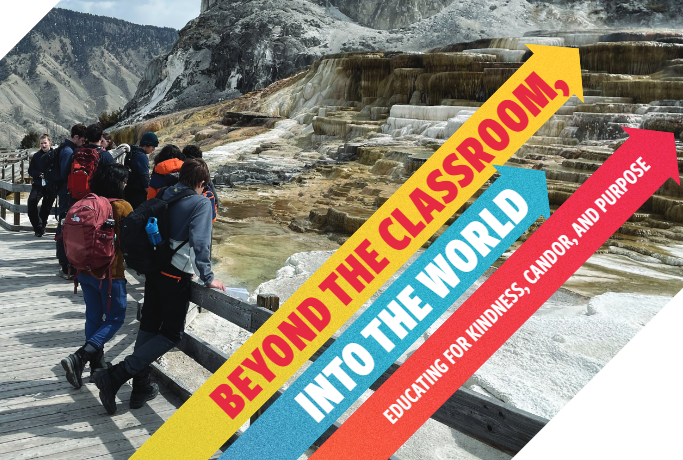
At Eastside Preparatory School we believe that education is not confined only to classrooms but can be found anywhere. That’s why an EPS education includes ample opportunities for students to explore the world beyond the classroom.
Education happens not only in the classroom with riveting texts, hands-on experiments, and lively discussions, but it is also found in tidepools and museums, on hiking trails and city streets, in community gardens and cultural exchanges. Through our Education Beyond the Classroom (EBC) program, students experience learning as a fully immersive, real-world endeavor—one that fosters curiosity, builds confidence, and inspires compassion.
The theme of this issue of Inspire—Responsible Action: Kindness, Candor, Purpose—offers a powerful lens through which to understand the vision and value of EBC. While it’s easy to reduce kindness to politeness, candor to blunt honesty, and purpose to personal ambition, we invite students to see these as deeper disciplines—practices that shape how they engage with the wider world.
In all its forms—Fall Orientations, Outdoor Adventures, Service Learning, local EPS Ventures, and especially EBC Week—Education Beyond the Classroom is where these values are tested, refined, and brought to life.
CHOOSING WITH PURPOSE, NOT JUST PREFERENCE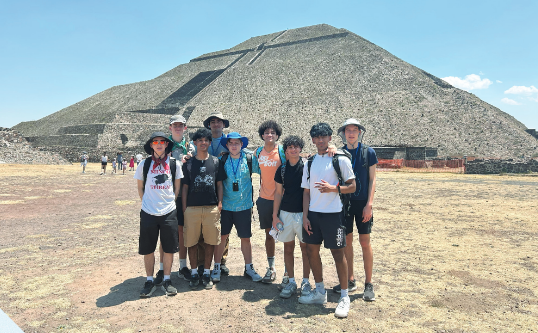
Each November, when EBC Week offerings are published, anticipation rises across campus. Students in eighth through twelfth grades rank their top choices from an array of opportunities: cultural immersion in Spain, citizen science in Yellowstone, creative arts intensives in Seattle, explorations of civil rights history in the American South, and more.
The offerings are wide-ranging, challenging, and truly exciting—and that makes the decision difficult.
Invariably, many students grapple with an uncomfortable truth: they may not get their first choice. This is where responsible action begins.
It can be tempting to choose a trip based on where your friends are going or which destination feels the safest or most familiar. But the most powerful learning often happens outside of those comfort zones.
At EPS, we encourage students—and their families—to think expansively, not transactionally. Which trip might stretch me? Which one connects with my interests or values? Which might change how I see the world—or myself?
When students don’t receive their first choice, disappointment is natural. But time and again, we hear students reflect on that initial letdown with unexpected gratitude.
“I didn’t think I’d like this trip, but it turned out to be one of the best weeks of my life,” or “At first I was disappointed not to go with my friends, but this was exactly the right trip for me.”
Every EBC Week experience is designed to be educational, inspiring, and genuinely worthwhile. None of these experiences are filler. None are fluff. And often, the trips students never expected to love become the ones that shape them most.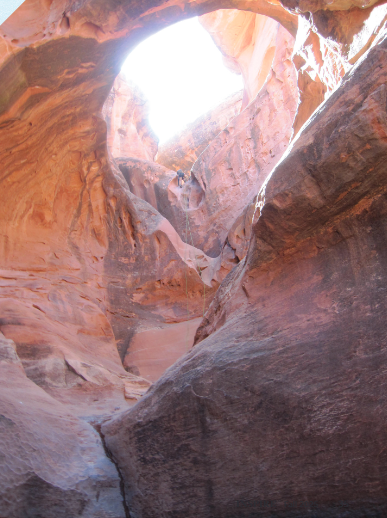
DESIGNING FOR DEPTH, NOT ENTERTAINMENT
Let’s be clear: EBC Week is not a vacation. It is not a break from school—it is school, just in a different setting and a different form. Every EBC trip is an extension of our curriculum, designed with the same rigor, intention, and care that goes into our classroom experiences.
Our approach is grounded in the principles of experiential education—learning through direct experience, with reflection, relevance, and responsibility at its core. Faculty chaperones spend months crafting opportunities that are intellectually rich, emotionally resonant, and socially meaningful.
Students might conduct ecological research, create community art, study historical memory, volunteer, or practice language immersion—all while collaborating closely with peers, chaperones, and field professionals.
These trips are demanding, in the best possible way. They ask students to solve problems, navigate ambiguity, communicate across differences, and take risks. They push students to reflect on who they are and what they care about. They challenge them to learn through experience, not just about it.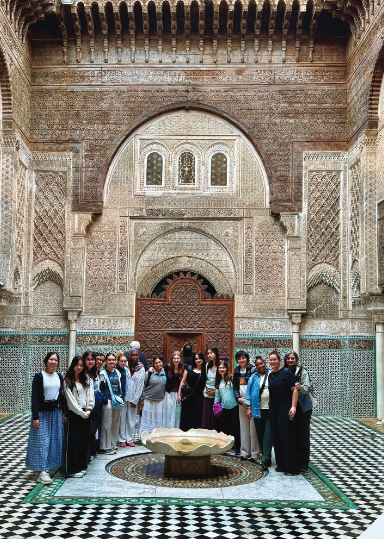
Our faculty chaperones are carefully trained in risk management, student wellness, and group facilitation. And every trip includes structured pre-trip preparation and post-trip reflection—because processing the experience is essential to deep learning.
A MODEL OF SUSTAINABLE AND ETHICAL ENGAGEMENT
Responsible action also means thinking deeply about how we engage with the world—ethically, environmentally, and equitably. Our student-led carbon offset initiative is one example.
EPS works to offset the carbon footprint of EBC Week travel by funding the planting of mangrove trees in regions like Madagascar, one of our past EBC destinations. But this is not just a box to check—it’s a student-driven effort rooted in education and impact, connecting our travel with global sustainability goals and lived experience.
We also work to ensure our trips model reciprocity and respect. Whether we’re volunteering with local organizations, studying Indigenous histories in the Pacific Northwest, or building cultural connections abroad, we emphasize responsible engagement. That means listening more than speaking, contributing rather than consuming, and understanding the responsibilities that come with visiting any community.
EMBRACING DISCOMFORT, LEANING INTO GROWTH
None of this works without a willingness to be uncomfortable. That’s where candor matters most—candor with oneself, with others, and with the experience itself.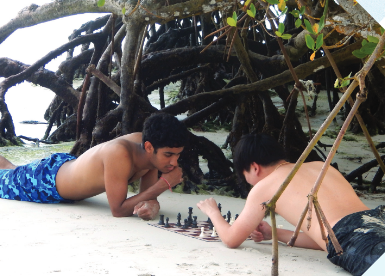
We ask students to show up authentically, to try new things even when they are hard, and to reflect honestly on what they’re learning. We ask families to support that growth—not by smoothing over every bump in the road, but by trusting in the value of the bumps.
Discomfort is not a sign of failure—it’s often a signal that deep learning is underway.
One intentional source of discomfort is our low-tech approach to EBC Week. In alignment with our educational values—and the practices of many of our partners—many EBC trips are completely phone-free. Others allow limited, structured use.
This can be challenging for students accustomed to constant connection—and for parents used to constant access. But stepping away from screens allows students to engage more fully, to form deeper connections, and to be truly present in their surroundings.
In a world increasingly mediated by technology, we believe this kind of presence is both radical and essential.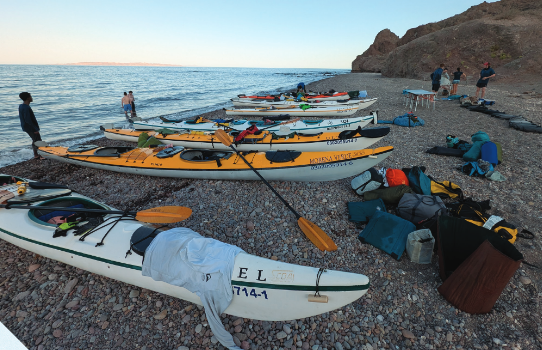
THE HEART OF EBC
Ultimately, the heart of Education Beyond the Classroom is not about where students go—it’s about what they learn when they engage fully in hands-on experiential education.
Students become curious learners. Brave travelers. Thoughtful teammates. Compassionate leaders. They become people who act with kindness, speak with candor, and live with purpose.
In a world that often prizes ease and immediacy, EBC reminds us all—students, teachers, and families alike—that education at its best is immersive, challenging, and transformational. It shows us that the most important lessons are rarely the easiest ones—and that the growth that lasts is the growth that is earned.
As we look ahead to the next EBC Week, we invite students and families to lean in. Lean into the challenge. Lean into the unknown. Lean into the opportunity to see the world—and themselves—in a new light.
Because the world doesn’t just need smart students. It needs thoughtful, courageous people. And that’s exactly who our students are becoming.