

Insight | Thriving: Beyond Happiness and Success
By Paul Hagen, Director of Student Well-Being
Several years ago, a colleague declared, “Our goal should be for all students to thrive!” As a new teacher, I agreed (hard not to with a claim like that). Yet, over the years, I’ve found myself returning to more difficult questions: What does it actually mean to thrive, and how would we know if our students were thriving?
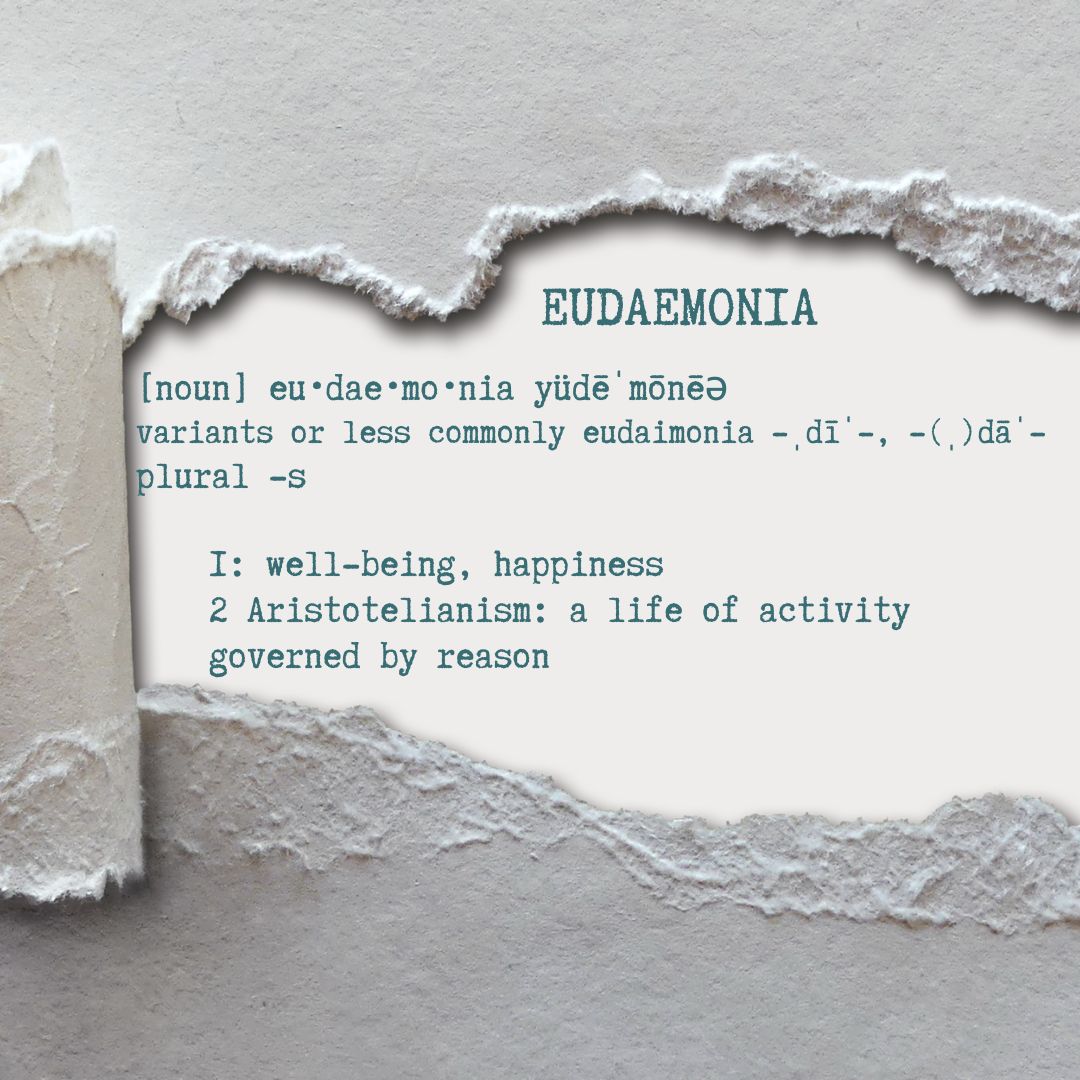
When we talk about thriving, we often use words like happiness, success, and well-being interchangeably, but they are not quite the same. In the 4th Century BCE, the Greek philosopher Aristotle used the word eudaimonia, often translated as “flourishing,” to describe something deeper. According to Aristotle, eudaimonia is not a fleeting feeling of joy or fulfillment, but rather a way of living a purposeful and fulfilling life.
Thriving, in this sense, is not about constant happiness or the absence of struggle. In fact, it often includes challenge and discomfort as mechanisms for growth. To thrive is to be moving forward with intention, guided by values. It is not, as we are sometimes wrongly assume, a static state of achievement, success, or happiness. To thrive is to feel connected to others, grounded in your authentic self, and engaged in something that matters beyond yourself.
But what did Aristotle know? After all, he didn’t have to contend with traffic, social media, college admissions, or the 24-hour news cycle. This raises an interesting tension: Is Aristotle’s ideal of eudaimonia even attainable in today’s modern society?
The world our students inhabit is fast, complex, and often overwhelming. They are navigating academic pressure, social dynamics, constant digital connectivity, and a steady stream of information, much of it unsettling. Even in a strong and supportive community like ours, these forces shape our students’ sense of well-being and their ability to thrive.
And so, if thriving is our goal, we have to begin by asking our students how they are actually doing in the world they inhabit.
This is why, for the past six years, we have conducted a student wellness survey to better understand where our students are thriving and where they are struggling. Each year, students in Grades 6–12 share anonymous reflections on their experiences. They respond to questions about stress, sleep, relationships, belonging, social media, schoolwork, and more.
The results have been both encouraging and clarifying. Many of our students report strong connections, support from adults, and an overall sense of well-being. At the same time, the data consistently highlights areas where students are stretched, including managing time and expectations, balancing multiple commitments, getting enough rest, finding breaks from screens, and navigating stress and anxiety.
Next week, students will again participate in this survey. As before, it is completely anonymous and designed to give us a clearer, more nuanced understanding of the student experience.
These insights matter. They shape how we design programs, how we support all students, and how we continue to build a community where students can thrive.
Thriving is not something we can mandate or manufacture. It emerges over time through strong relationships, through meaningful challenge, through deep reflection, and through continued growth. It shows up when students feel known and valued, when they are engaged in meaningful work, when they are supported through difficulty, and when they are given the space to grow into themselves.
Our work, together, is to create the conditions where that kind of growth is possible and to keep listen to and learning from students, so we can continue to do better work.