

Insight: Care Behind the Curtain
By N. Cass Megiddo, EPS Class of 2026
Drop in to any performing arts class and you may observe exercises and games that seem fun or silly. And they are! But they are also where the real work begins: learning how to communicate clearly, give feedback directly, and receive it without shutting down. As a student in the performing arts, I’ve found that clarity between people is a skill not just useful in rehearsal, but in how I respond to direction outside of theatre as well: learning to receive feedback without overthinking it or turning it into something personal, and instead treating it as information that helps me improve. This clear communication is how we demonstrate care for each other and the show. Care in theatre isn’t only encouragement or creativity, but also knowing how to communicate in a way others can immediately use. As we close in on opening night of Urinetown, clarity matters because everyone is trying to solve problems quickly. Feedback only works if it’s direct enough to act on.
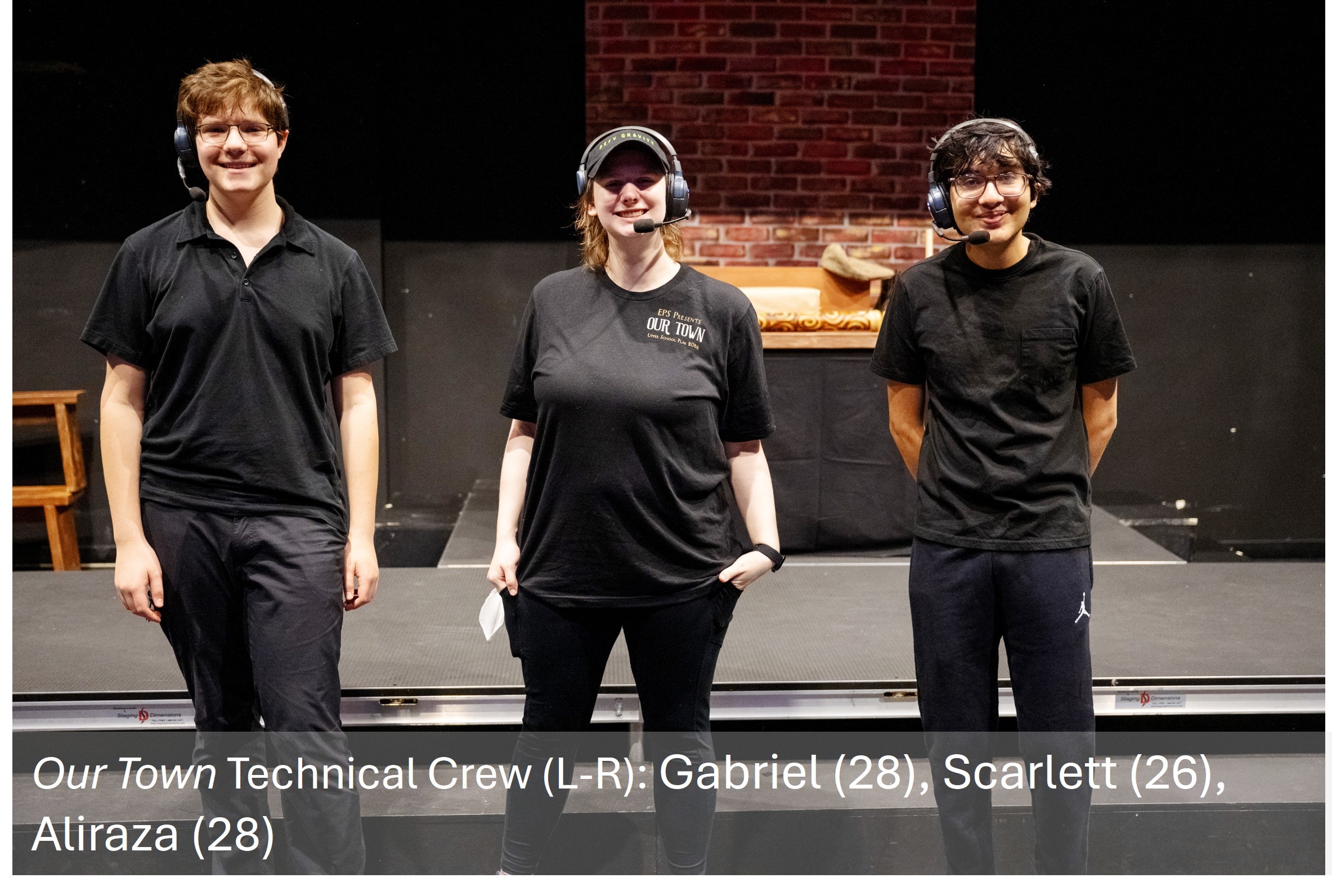
The same need for clarity shows up even more in the technical side of the production. One time during a performance I worked on as an assistant stage manager, several lighting cues malfunctioned mid-show. In the moment, communication had to be clear, with no time to debate. The stage manager took control of headset communication, the lighting operator diagnosed the issue, and we problem-solved in real time. The problem was fully fixed during intermission, but what mattered was that no one added noise to the situation. Because communication stayed clear, the show continued without the audience feeling the disruption.
Theatre depends on people being able to trust one another enough to communicate honestly, clearly, and with purpose. Whether through rehearsal exercises, giving notes, or solving problems during a live performance, that clarity is what allows both the production and the people involved in it to succeed together.